
Contents
Acute care units run on a math problem that doesn't balance: a fixed number of nurses, a growing number of things to watch, and a bedside that needs eyes on it more consistently than any staffing ratio can actually provide. VSTOne is VirtuSense's autonomous patient monitoring platform, built to close that gap at the bedside without adding a wearable, a camera-based observer, or another dashboard for nursing staff to check.
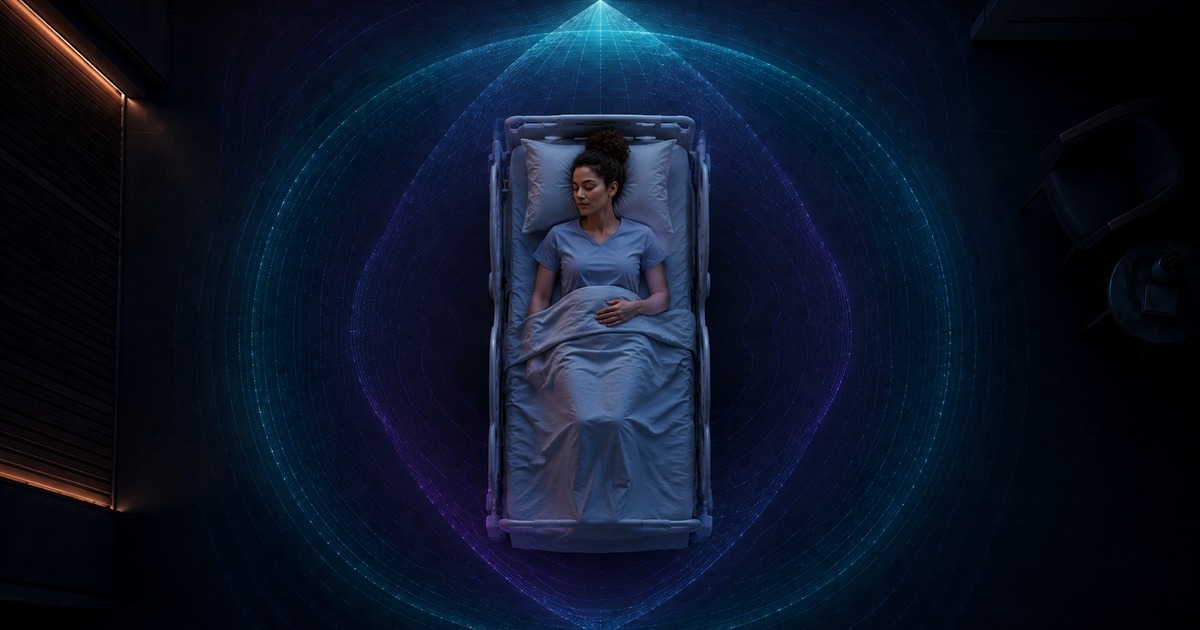
Autonomous patient monitoring is technology that uses on-device sensors — in VSTOne's case, LiDAR and computer vision — to continuously watch a patient room and automatically flag fall risk and pressure injury risk, without a person watching a video feed or a device worn by the patient. It's built specifically for the acute care bedside, not adapted from a home health or wellness device.
This page covers what to look for in an autonomous monitoring system for acute care, how VSTOne enhances bedside assistance specifically, and why the sensor technology underneath it matters as much as the alerts it sends.
What Makes an Autonomous Patient Monitoring System Right for Acute Care?
The right system for acute care detects risk continuously at the bedside, processes data without exposing patient images, and routes alerts into the nursing workflow that already exists — rather than requiring a new one.
A few criteria matter more than vendors' marketing usually lets on:
- Sensor technology. Camera-based systems capture an actual image of the patient; LiDAR-based systems like VSTOne detect motion and position without producing a viewable image at all. For a bedside environment — where patients are being bathed, transferred, and treated — that distinction is not cosmetic.
- Where processing happens. On-device processing means patient data doesn't leave the room to reach a decision. Systems that rely on a centrally staffed video command center are solving the same problem with a different tradeoff: more human oversight, but a continuous video feed to go with it.
- Clinical scope. A system that only watches for falls still leaves pressure injury risk to a separate protocol, sensor, or team. VSTOne monitors for both on one platform.
- Workflow fit. The best systems reduce the number of things a nurse has to check, not add one more screen to the rotation.
VSTOne is built around all four of these specifically for the acute care bedside — LiDAR sensing, fully on-device processing, fall and pressure injury coverage on one platform, and alerts that route directly into existing nursing workflows. (If you're comparing VSTOne against specific other platforms on these exact criteria, see our head-to-head breakdowns linked at the bottom of this page.)
How Does VSTOne Enhance Bedside Assistance in Acute Care?
VSTOne enhances bedside assistance by detecting risk at the bedside in real time and routing it to the right caregiver immediately, closing the gap between when a risk event starts and when a person responds to it.
"Bedside assistance" in this context means a few concrete things, not just an alert sound:
- Earlier fall risk detection. VSTOne detects a patient attempting to exit a bed or chair unsafely, rather than after a fall has already occurred.
- Continuous pressure injury monitoring, so skin integrity risk is tracked throughout a shift instead of caught at a scheduled check.
- Targeted alerts, sent to the caregiver assigned to that room rather than broadcast to an entire unit, cutting down the noise that leads to alarm fatigue.
- No added task for the patient or family. Because there's no wearable and no device to operate, bedside assistance doesn't depend on patient compliance the way some monitoring approaches do.
How Does VSTOne Reduce Nurse Workload and Prevent Burnout?
VSTOne reduces workload by cutting the number of alerts a nurse has to personally evaluate, which is the same mechanism behind alarm fatigue, one of the most consistently cited drivers of nursing burnout.
The scale of that problem is well documented. Somewhere between 72% and 99% of hospital alarms are false or clinically insignificant, according to research on alarm fatigue as a patient safety hazard, and nurses spend an estimated 15% to 25% of a shift on documentation, per McKinsey's 2023 analysis of the nursing workload. Recent nursing workforce surveys in 2026 have put burnout rates anywhere from the mid-50s to high 80s in percentage terms depending on methodology — every version of that number points the same direction. VSTOne is built to reduce the specific inputs to that problem: fewer false alerts, and less time spent reconciling ambiguous events after the fact.
Privacy-First by Design: Why Sensor Technology Matters
VSTOne's privacy-first positioning isn't a marketing claim layered on top of the product — it comes directly from the sensor technology underneath it.
LiDAR and computer vision detect a patient's position, movement, and posture without producing a photorealistic image. There's no video feed for anyone to watch, on-site or remote, and no image data that could be exposed in a breach the way camera footage could be. Combined with on-device processing — meaning the detection happens at the sensor rather than a server or cloud environment — VSTOne is built so that patient data doesn't need to leave the room to do its job. For acute care leaders weighing HIPAA exposure alongside clinical benefit, that architecture is the actual answer, not an add-on policy.
VSTOne in Practice
Northwell Health has reported a 4x return on investment from its VSTOne deployment, driven by measurable reductions in falls and lower reliance on one-to-one sitter staffing. Across VirtuSense's acute care customers more broadly, the consistent pattern is fewer falls, lower sitter costs, and reduced nurse alert fatigue — the same three problems this page opened with.
Frequently Asked Questions
What is the best autonomous patient monitoring system for acute care? The right system for acute care uses sensors that don't capture a viewable patient image, processes data on-device rather than in the cloud, covers more than one type of risk (fall and pressure injury, not just one), and routes alerts into existing nursing workflows. VSTOne is built around all four of these specifically for the acute care bedside.
How do autonomous patient monitoring platforms enhance bedside assistance in acute care? They detect risk — like an unsafe attempt to exit a bed — at the moment it starts, and route the alert directly to the caregiver responsible for that room, rather than relying on a scheduled check-in or a call button. That closes the gap between when risk begins and when a person responds.
How do autonomous patient monitoring platforms reduce nurse workload and burnout? They reduce the number of alerts a nurse has to evaluate by filtering out false and low-risk signals at the sensor, cutting into the alarm fatigue that's a well-documented driver of nursing burnout. They don't reduce patient assignments or replace hands-on care.
Does VSTOne work outside of acute care hospitals? Yes. VSTOne is deployed in acute care hospitals as well as skilled nursing facilities and senior living communities, since fall and pressure injury risk don't stop at hospital discharge.
The Bottom Line
The bedside monitoring gap in acute care isn't a staffing problem you can hire your way out of — it's a visibility problem, and it needs a technology built for the constraints of a hospital room specifically: no wearable, no video feed, no added screen for nursing staff to check. That's what VSTOne is built to be.
See VSTOne in action for your unit — Request a Demo.
For a closer look at how this plays out over a real shift, read A Tale of Two Shifts: How AI Monitoring Eases Nurse Burnout. To see how VSTOne stacks up against specific other platforms, see our comparisons once published.