
Contents
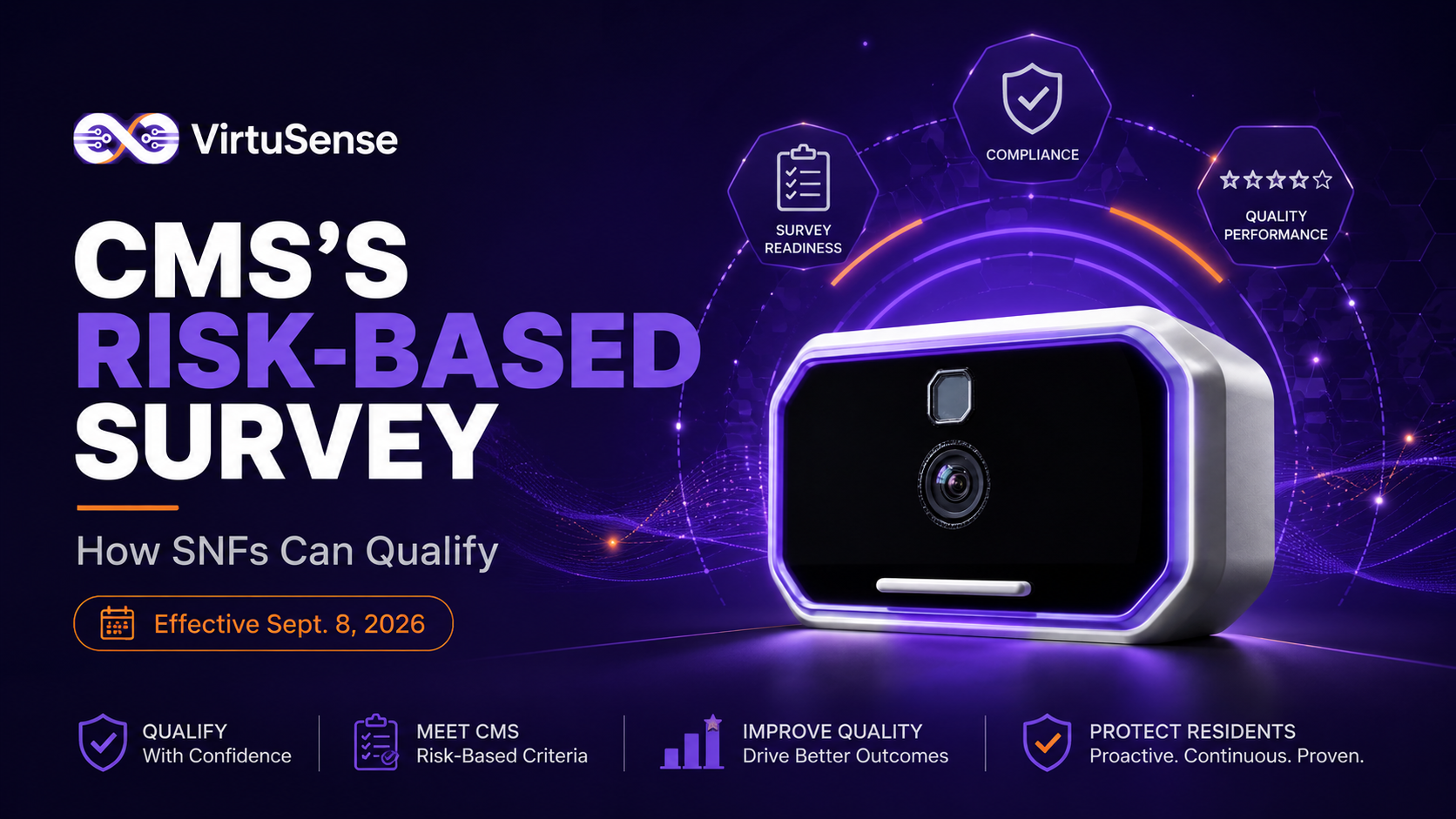
On July 16, 2026, the Centers for Medicare & Medicaid Services announced a new inspection model for nursing homes, and it goes live nationwide on September 8, 2026. Only an estimated 12% of facilities will qualify for it at launch.
That's the headline. The harder question for most skilled nursing facility administrators is simpler and more urgent: will my facility be one of them, and if not, what do I need to fix?
The Risk-Based Survey is a streamlined CMS inspection model for nursing homes with strong quality track records. Instead of a full standard recertification survey, qualifying facilities receive a shorter, more focused review — fewer survey activities, a smaller resident sample, and less surveyor time on-site. It's not a separate accreditation or a bonus program. It's a faster path through the same regulatory requirement every facility already has to meet.
This post covers what the Risk-Based Survey actually requires, which quality measures determine whether you qualify, and where ambient AI fits into closing the gap quickly.
Key takeaway: CMS's Risk-Based Survey rewards nursing homes with strong Five-Star ratings and clean citation histories with a shorter, lower-friction inspection starting September 8, 2026. Eligibility hinges on quarterly performance across staffing and quality measures — including falls with major injury and new or worsening pressure injuries, two of the metrics facilities can move fastest with real-time monitoring. Ambient vision AI like VirtuSense's VSTOne directly targets both measures without adding wearables or pressure pads.
What Is CMS's Risk-Based Survey, and Which Nursing Homes Qualify?
The Risk-Based Survey (RBS) is a targeted inspection model that gives high-performing nursing homes a shorter, lighter-touch survey instead of the traditional full standard recertification process. CMS estimates roughly 12% of nursing homes nationwide will qualify when it launches on September 8, 2026.
The model is outlined in CMS memo QSO-26-14-NH. State survey agencies received training through August and September 2026 to prepare for the rollout. To qualify, a facility generally needs to meet several criteria at the same time, reviewed quarterly:
- An overall Five-Star rating on Care Compare
- A staffing rating of at least three stars
- Accurate, timely data submission to CMS
- No citations involving actual harm, abuse, or a pending high-level intake investigation
CMS will publish the list of qualifying facilities every quarter and mark them with an icon on the public Care Compare website. That's a meaningful shift: RBS eligibility is no longer just an internal compliance detail. It's a visible signal that families and referral partners can see when they're choosing a facility.
What Quality Measures Actually Make Up the Five-Star Rating?
The Five-Star Quality Rating combines three components — health inspections, staffing, and a Quality Measures score — and two of the specific, CMS-tracked outcomes inside that Quality Measures component are falls with major injury and new or worsening pressure ulcers.
These aren't obscure metrics. They're also used in SNF Quality Reporting Program (QRP) submissions, so improvement in either one has a compounding effect across more than one CMS program at once.
That matters for facilities weighing where to focus first. Staffing ratios take time and budget to move. Citation history is backward-looking — you can't undo a past survey finding. But falls and pressure injuries are outcome measures a facility can start influencing the same week a new prevention tool is in place. Of the four RBS eligibility factors, they're the two most directly within an administrator's control on a short timeline.
How Ambient Vision AI Helps SNFs Improve the Measures That Matter Most
Ambient vision AI detects the movement pattern that precedes a fall and the early risk indicators associated with skin breakdown, alerting staff in real time before either becomes an incident — which means it targets the two quality measures most tied to RBS eligibility, at the same time, from the same sensor.
Most fall-prevention or pressure-injury tools address only one of those two risks. Wearables can flag a fall in progress but say nothing about pressure injury risk. Pressure pads catch skin risk in bed but miss falls that happen anywhere else in the room. VirtuSense's VSTOne uses edge AI — LiDAR and computer vision that process entirely on-device — to cover both risks continuously, without a wearable, a pad, or any physical contact with the resident.
| Approach | Detects Falls | Detects Pressure Injury Risk | Requires Wearable/Contact | Data Leaves the Room |
|---|---|---|---|---|
| Manual rounding | Reactive only | No | No | No |
| Wearable sensors | Yes | No | Yes | Sometimes (cloud sync) |
| Pressure pads | No | Partial (bed-only) | Yes (pad placement) | Sometimes |
| Ambient vision AI (VSTOne) | Yes, predictive | Yes | No | No — edge AI, on-device only |
Health systems using VSTOne have seen the difference show up in hard numbers. Emory Healthcare measured a 5.5x return on investment and hosted a VSTOne breakout session at AONL 2026. Northwell Health measured a 4x ROI, driven by fewer falls and lower sitter costs.
How VirtuSense's VSTOne Addresses This
VSTOne is edge AI: LiDAR and computer vision that process entirely on-device, so no patient video or data ever leaves the room. That distinction matters specifically for facilities preparing for RBS. As survey qualification becomes more publicly visible through the Care Compare icon and quarterly review cycle, facilities need monitoring technology that improves their quality measures without introducing new privacy or compliance exposure of its own.
Facilities already using VSTOne have seen that play out in both directions — better fall and pressure injury outcomes, and no new data-handling risk to manage. Emory Healthcare's 5.5x ROI and Northwell Health's 4x ROI both trace back to the same underlying shift: catching risk before it becomes an incident, instead of documenting it afterward.
Frequently Asked Questions
What is CMS's Risk-Based Survey and which nursing homes qualify?
The Risk-Based Survey (RBS) is a shorter, more focused CMS inspection for nursing homes with strong recent performance. Facilities qualify quarterly based on a Five-Star overall rating, at least a three-star staffing rating, accurate data submission, and a clean citation history free of harm-level findings. CMS estimates about 12% of nursing homes nationwide will qualify when RBS launches nationally on September 8, 2026.
What quality measures make up a nursing home's Five-Star rating?
The Five-Star system combines three components: health inspection results, staffing levels, and a Quality Measures score. The Quality Measures component includes specific, CMS-tracked outcomes such as the percentage of residents with new or worsening pressure ulcers and long-stay residents who experienced a fall with major injury.
How does ambient AI help nursing homes improve fall and pressure injury quality measures?
Ambient vision AI platforms like VirtuSense's VSTOne use LiDAR and computer vision to detect the movement patterns that precede a fall and the risk indicators associated with skin breakdown, alerting staff in real time before an incident happens. Because it processes video on-device rather than in the cloud, it adds this monitoring without introducing new data-privacy exposure — a meaningful advantage for facilities under increased public visibility from RBS.
What happens to nursing homes that don't qualify for the Risk-Based Survey?
Facilities that don't meet RBS eligibility criteria continue to receive the traditional, longer standard recertification survey. They aren't penalized beyond the existing survey process, but they also don't receive the Care Compare "high performer" icon or the reduced surveyor time that qualifying facilities get — a real difference as more consumers reference Care Compare when choosing a facility.
The Bottom Line
RBS turns fall and pressure injury quality measures into a visible, quarterly-reviewed signal of facility performance, not just a box to check during survey week. Facilities that act before the September 8 launch — rather than after seeing where they land in the first quarterly review — get a head start on both survey outcomes and public Care Compare visibility.
See how VSTOne helps reduce falls and pressure injuries. Request a demo
Related reading: Fall Prevention Technology for Skilled Nursing Facilities
Sources: CMS.gov — Nursing Home Quality Measures; LeadingAge — CMS: National Nursing Home Risk-Based Survey Approach Begins September 2026, July 16, 2026